
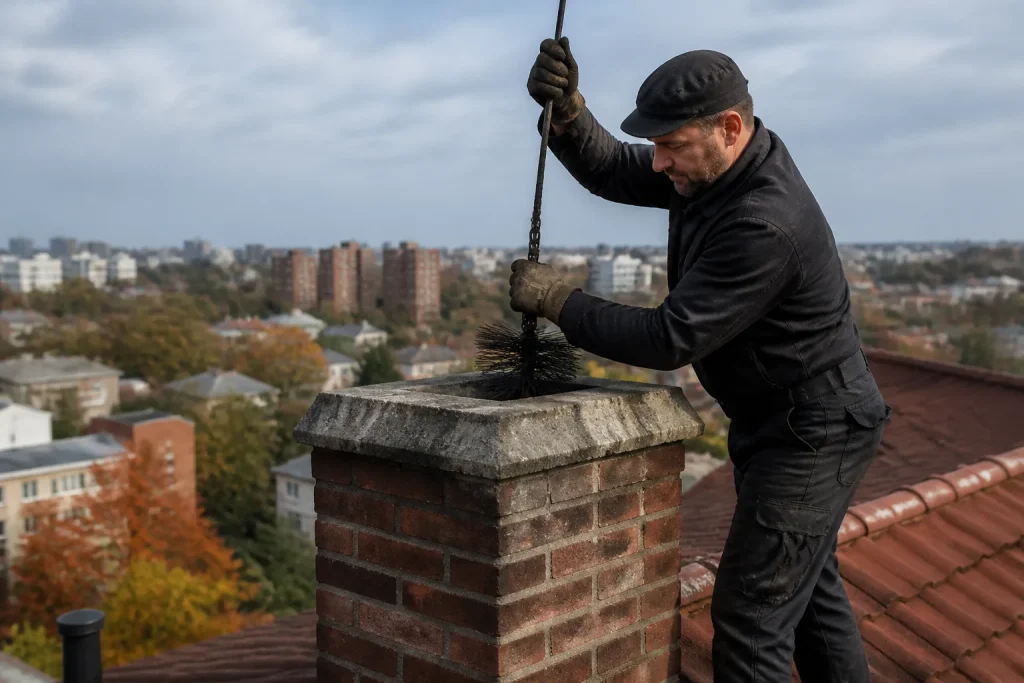
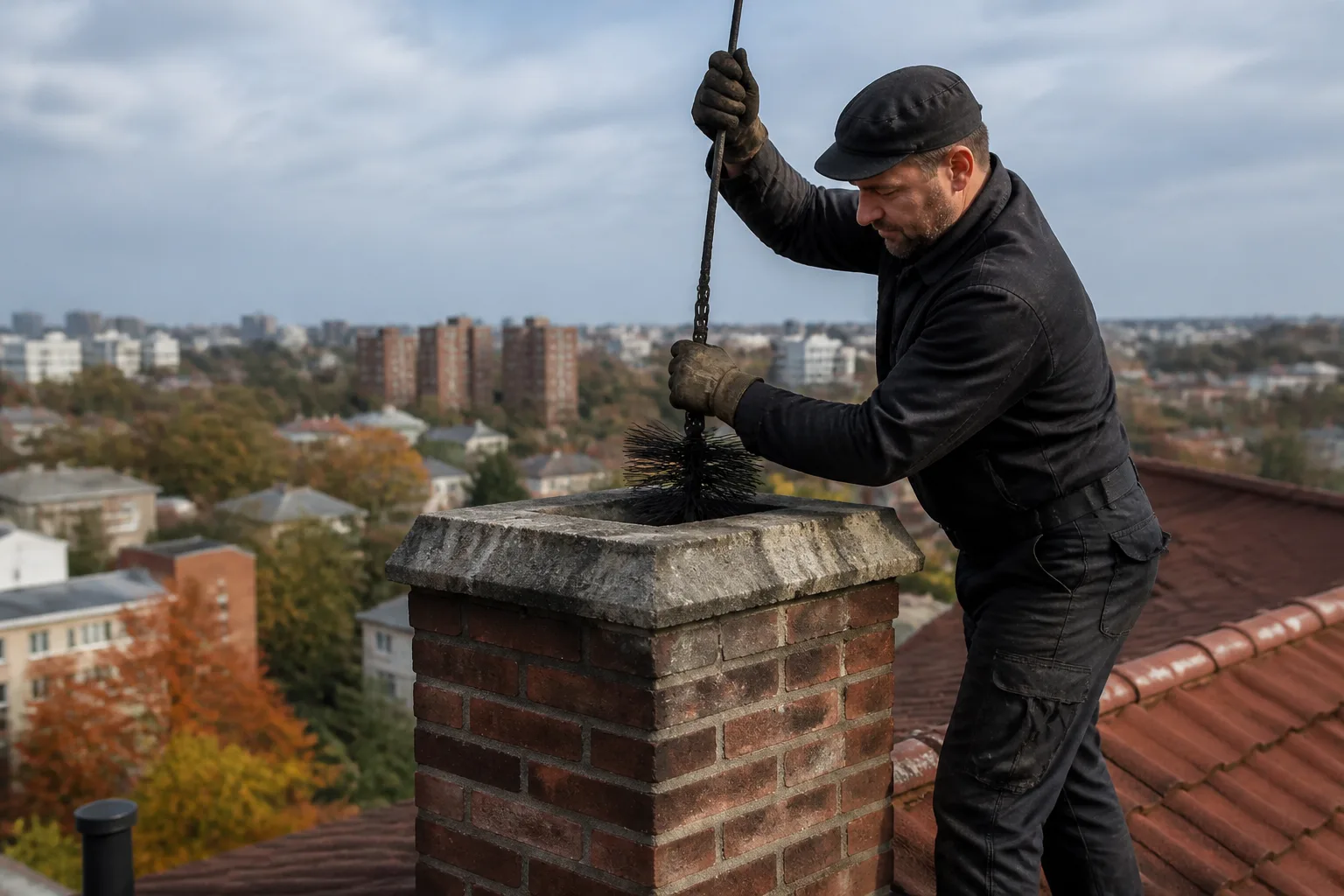
Top Signs You Need Chimney Cleaning Service – Don’t Ignore These
Most homeowners wait for smoke in the living room before they think about the chimney. By then the problem has usually been sending quieter signals for months. A faint sulfur smell, a little white staining on the brick, a fire that takes three matches instead of one: each of these is the chimney telling you something specific about its condition. This guide decodes what the common warning signs actually mean mechanically, so you can tell the difference between “schedule a cleaning” and “stop using this fireplace until someone looks at it.” And if you’d rather have a pro read the signs for you, call Chimney Sweep Fordham at (866) 947-8181.
Key Takeaways
- Smoke rolling back into the room, sulfur odors, white staining, flaking brick, and slow-starting fires each point to a different mechanical problem.
- Seasonal, predictable signs mean book a sweep. Signs of active damage mean don’t light another fire until the chimney is inspected.
- The dense, older housing stock in Fordham means soot from neighboring buildings and repeated freeze-thaw cycles add warning signs newer suburbs don’t see.
- A proper diagnostic sweep looks at liner condition, crown integrity, and draft performance, not just the creosote layer.
What Are the Signs You Need Chimney Cleaning Service?
The signs you need chimney cleaning service are smoke backing into the room, a sulfur or campfire smell that lingers after the fire is out, white staining or flaking on the exterior brick, and fires that struggle to start or stay lit. These are the signals a chimney sends before a serious problem develops. Some mean schedule a cleaning soon. Others mean stop using the fireplace until a technician inspects the system.
Here’s what each sign is really telling you:
- Smoke rolling back into the room. A blocked or narrowed flue can’t pull exhaust up and out. That smoke is a draft failure, not a cosmetic annoyance.
- Sulfur or campfire smell after the fire is out. A heavy creosote layer and restricted airflow let odors drift back down the flue instead of up and out.
- White staining on the brick exterior. That’s efflorescence, and it means water is moving through the masonry.
- Flaking or crumbling brick and mortar. Spalling happens when trapped moisture freezes, expands, and pushes the brick face off. In Fordham’s climate, that freeze-thaw cycle repeats through the cold months.
- Fires that struggle to start. A slow-starting fire often means the draft is weak, sometimes because of a blocked flue or an undersized cap.
If you recognize more than one of these, don’t wait for the next burning season. Call (866) 947-8181.
Which Signs Are Seasonal and Which Mean Stop Using the Fireplace?
Seasonal, predictable signs mean schedule a cleaning. Signs of active, worsening damage mean don’t use this fireplace until it’s inspected. The distinction matters more than most homeowners realize, because a fire lit into a damaged flue can turn a repair into a much bigger job.
Seasonal signs that mean “book a cleaning”:
- A fire that’s a little smokier than it was last winter.
- Some creosote buildup visible near the damper.
- A faint smell when the season starts up again.
These tend to show up at the start of the burning season and follow a pattern. A standard chimney sweep usually resolves them.
Signs of active damage that mean “stop using it”:
- White efflorescence spreading across the exterior.
- Brick faces flaking off or mortar crumbling and falling.
- Strong, persistent odors even when there’s no fire.
- Visible cracks in the flue liner.
- Smoke that backs into the room with every fire.
These point to water intrusion, liner failure, or a draft problem that a cleaning alone won’t fix. Using the fireplace on top of a compromised liner is where small problems get expensive. A standalone inspection gives you a clear diagnosis before any repair decision is made.
Why Does Fordham’s Urban Environment Create Its Own Warning Signs?
Fordham’s dense, older housing stock creates warning signs you simply won’t see in a newer suburb. Soot from adjacent buildings settles on roofs and finds its way into chimney crowns and flue tops. Combined with repeated freeze-thaw cycles and aging mortar, that means water damage and draft problems show up here sooner than in areas built more recently.
Here’s what that looks like for a Fordham homeowner:
- Soot from neighboring buildings adds an external layer of particulate grime that overworks caps and accelerates wear on the crown.
- Freeze-thaw cycles are the silent driver behind efflorescence and spalling. Moisture enters the masonry, freezes at night, expands, and pushes the surface loose. Repeat that across a Fordham winter and brick starts coming off in flakes.
- Aging mortar joints on older chimneys crack and let in more water, which feeds the same cycle.
- Close-set rooflines can affect draft and how exhaust leaves the flue, especially on taller chimneys that draw from nearby structures.
If you’ve noticed staining or flaking that a neighbor in a newer subdivision of the area never seems to have, that’s not your imagination. It’s the building stock and the climate doing what they do. It’s also a reason to catch the signs early: chimney repair on a small issue is a much better outcome than a rebuilt crown or a full reline. If you’re unsure whether a stain is cosmetic or active, call (866) 947-8181 and we’ll take a look.
What a Proper Diagnostic Sweep Actually Looks For
A proper diagnostic sweep looks beyond the creosote layer. It checks liner condition, crown integrity, cap fit, and draft performance, then reports what it found. A quick brush-and-go leaves those unchecked, which is why a few warning signs get missed until they’ve grown into structural damage.
Where a cleaning-and-inspection job is done right, these are the checks that matter:
- Creosote depth and type tells you how soon the next sweep is due.
- Liner condition shows whether the flue is sound or has gaps that allow heat and gases to reach surrounding materials.
- Crown integrity reveals whether the concrete cap at the top is sealing properly or letting water in.
- Cap fit and condition confirms the top of the chimney is protected from rain and animals. A properly fitted cap is the difference between a draft problem and a dry, protected flue, which is why we fit brands like Famco and Olympia Chimney rather than generic hardware.
- Draft performance confirms the chimney is actually pulling exhaust up and out the way it’s supposed to.
We check the whole system from crown to firebox, so a single visit can flag a liner issue, a damaged crown, or a draft problem before it turns into a bigger repair. And where a liner needs resurfacing rather than a full tear-out, HeatShield restoration extends the life of the existing flue. With DuraFlex liner systems available for full relining when restoration isn’t enough, there’s a right-sized solution rather than a one-size-fits-all replacement. Our technicians have up to 8 years of experience reading these signs.
When to Call a Pro
If a fire struggles to start, smoke backs into the room, a sulfur smell lingers, or you see white staining or flaking brick on the exterior, that’s your cue to call a pro. You don’t need to diagnose the cause yourself; you just need to stop ignoring the signs and get a technician to explain what they mean. A proper diagnostic sweep will tell you whether the chimney needs a cleaning, a repair, or a look at the crown and cap. Rather than guess, call (866) 947-8181 and we’ll take a look.
Related services in Fordham: chimney cap & crown, chimney repair, and inspections. One call covers the sweep, the inspection, and any repair that turns up, so you’re not juggling contractors.
The Bottom Line
The warning signs a chimney sends are specific. Smoke backdraft signals draft failure, sulfur smells point to heavy creosote and restricted airflow, white staining means water is moving through the masonry, and flaking brick is active damage from freeze-thaw cycles. Seasonal, predictable signs mean book a cleaning. Active, worsening signs mean stop using the fireplace until it’s inspected. In Fordham, dense housing, soot from neighboring buildings, and tough freeze-thaw cycles make it worth catching the signs early. If you’re in Fordham and need help, Chimney Sweep Fordham offers free estimates. Call (866) 947-8181. We answer 24/7, with fast dispatch from 7am to 7pm, Sunday through Friday.
Frequently Asked Questions
Most chimneys need sweeping once a year if the fireplace is used regularly, and more often if you burn a lot of soft or unseasoned wood. Heavy creosote buildup is the main driver, so a quick look at the flue each season tells you whether it’s due. Call (866) 947-8181 for an exact quote, or to book a sweep.
White staining is efflorescence, and it means water is moving through the masonry. That moisture freezes and expands in cold weather, which accelerates structural decay. It’s a sign to get the chimney inspected before the damage spreads. Call (866) 947-8181 for a free estimate.
A sulfur or campfire smell usually means a heavy creosote layer and restricted airflow are letting odors drift back down the flue. It’s a sign the chimney is overdue for a cleaning or has a draft issue. Call (866) 947-8181 for an exact quote, or book a diagnostic sweep.
Smoke backdraft, white staining, flaking brick, or a persistent smell all mean stop using the fireplace until it’s inspected. A cleaning resolves the seasonal signs, but active damage needs a diagnosis first. Call (866) 947-8181 for a free estimate.
Written by the team at Chimney Sweep Fordham.
Need Chimney Cleaning Help?
Call Chimney Sweep Fordham - the local pro we connect you with is licensed and insured, here with fast help in Fordham.
(866) 947-8181