
Chimney Sweep: Repair or Replace? How Fordham Homeowners Decide
Most Fordham homeowners ask the repair-or-replace question backwards. They point at the age of the chimney or the size of the crack and ask us to make the call from that. The honest answer is that neither age nor damage decides it on its own. What decides it is how you actually use the chimney and what a failure would cost you. A chimney that looks ready for demolition sometimes only needs targeted structural repair and relining. A chimney that looks fine from the driveway can be a rebuild waiting to happen. Without a camera inside the flue, nobody can tell you which one you have.
If you’d rather have a trained set of eyes on it than guess from the ground, call (866) 947-8181. We answer 24/7, and estimates are free.
Key Takeaways
- Repair versus replace is decided by use and failure cost, not by age alone.
- A camera inspection is the only way to see liner failure, interior spalling, or hidden crown damage.
- Shared flues and attached masonry in older Fordham housing change what “replacement” even means.
- Ask any contractor what evidence backs their recommendation before you commit.
What actually pushes a chimney toward replacement instead of repair?
Four structural conditions tip the decision toward replacement. Everything else usually points to repair.
- Liner failure along most of the flue length. A cracked or deteriorated liner in one section is a relining job. A liner that has failed from top to bottom, with flaking tiles or a collapsed middle, is a different conversation. HeatShield resurfacing can restore a liner in many cases where the structure is still sound. Where it isn’t, a full DuraFlex liner system is the path.
- Crown damage that has spread into the chimney top. A cracked crown is a straightforward fix on its own. Once water has worked through that crack into the brickwork below, the damage is usually no longer confined to the top.
- Spalling interior brick. Brick faces that are flaking and popping off inside the flue mean the masonry itself is breaking down. That’s not a surface problem you clean and move on from.
- Widespread mortar joint deterioration. Rebuilding joints in a localized area is normal chimney work. When the joints are failing throughout, you’re looking at what amounts to a rebuild of the structure.
What residents in Fordham get from us is a diagnosis, not a guess. Before we recommend a repair, we inspect. If a replace recommendation comes out of that inspection, it should be backed by camera footage you can watch yourself, not a verbal summary. The line between repair and replace runs straight through what the camera shows, and no amount of looking at the outside of your chimney substitutes for it.
How do you know if a replace recommendation is honest?
Ask for evidence. A contractor who recommends replacement should be able to show you the camera footage, point to the specific failure, and explain in plain terms why repair won’t hold. If they can’t do all three, you don’t have a recommendation yet. You have an estimate with no diagnosis behind it.
Here’s what to look for in any replace recommendation:
- Camera footage you can watch. The flue interior should be visible on a screen, not described to you in words. If they won’t show you, that’s your answer.
- A specific failure they can point to. “It’s old” isn’t a diagnosis. A failed liner section, a spalled course of brick, a crown that’s separated from the flue: those are.
- An explanation of why repair won’t work here. There should be a reason a reline or a crown repair isn’t the right call, and it should make structural sense.
- A written report. An inspection should deliver a clear condition report you keep, not a cursory walkthrough before the sweep.
One question worth asking directly: does this contractor do inspection as a standalone service, or only as a warm-up to a repair quote? It matters. A diagnostic that always ends in a replace recommendation tells you more about the business model than the chimney. We use HeatShield specifically because it lets a lot of full liner tear-outs get avoided. That’s a cost saving to you and a smaller invoice to us. Worth knowing when you weigh the advice you’re getting.
Repair versus replacement: the cost logic
Repair is the right spend when it meaningfully extends the life of the chimney. Replacement is the right spend when repair only delays the inevitable and you’d end up paying twice. The question isn’t which costs less today. It’s which costs less across the next ten or fifteen years of how you use the chimney.
A repair that holds through a full burning season and beyond is money well spent. A repair that fails the next winter is a delay, not a fix, and it usually costs more once you add it to the eventual replacement. The structural state of the flue is what tells you which scenario you’re in. Age alone doesn’t, and neither does the size of the crack you can see from the ground.
Use matters too. A chimney you burn in regularly, especially through the heating months, puts constant thermal stress on the masonry and liner. A chimney that sees occasional fires wears more slowly. Two chimneys with identical damage can justify different decisions based purely on how hard they’re used.
Why Fordham’s housing stock complicates the decision
“Replacement” doesn’t mean the same thing in every Fordham home. Older buildings often have chimneys that aren’t freestanding: they’re built into the party wall, shared with a neighboring flue, or tied into masonry that serves more than one function. That changes the structural picture.
- Shared flues: if your flue serves more than one appliance or shares a stack with a neighboring unit, replacement affects more than your chimney alone. That has to be accounted for before anyone quotes.
- Attached masonry: a chimney built into the wall means replacing it can mean disturbing brickwork that isn’t part of the chimney proper. Repair is often the smarter route for exactly this reason.
- Older construction and codes: a chimney built to an older standard may not meet current code requirements in its existing form. That doesn’t automatically mean replacing the whole thing, but it does mean any repair needs to be done with the current code in mind.
These factors are why a proper chimney repair assessment in Fordham takes time. The answer for a freestanding brick stack on the outside of the house is rarely the same as for a chimney woven into the building’s structure. We walk the whole system from the crown down to the firebox, and in a lot of older Fordham homes that walk turns up something the homeowner didn’t know was affecting the decision.
How to decide: a practical framework
Here’s how we’d work through it if it were our own chimney:
- Get an inspection first. Not a sweep with an inspection tacked on. A standalone chimney inspection that gives you a written condition report.
- Watch the camera footage. If you can’t see the failure yourself, ask why. A camera inspection with a photo report should be part of the process, not an add-on.
- Get the repair option on paper. A contractor who only offers replacement because that’s the service they sell isn’t giving you a real choice. Ask for the repair quote, with the brands and materials named.
- Weigh the repair cost against how much life it buys. If the repair holds for a meaningful stretch, it’s the right call. If it’s a patch on something already failing, it isn’t.
- Check the cap and crown while you’re at it. Crown and cap damage is the most common reason water gets in and starts the interior damage in the first place. A properly fitted chimney cap & crown installation, done with Gelco or Famco hardware, protects the flue from weather and keeps animals out. The right cap, properly fitted, is the difference between a draft problem and a dry, protected flue.
One thing we’ll say plainly: sometimes the honest answer is that the work can safely wait. If the camera shows a liner that’s worn but structurally intact, we’ll tell you that and tell you what to watch for. A chimney that doesn’t need work this year doesn’t need work this year, and we’d rather you trust the next recommendation than feel pushed into this one.
When to call a pro
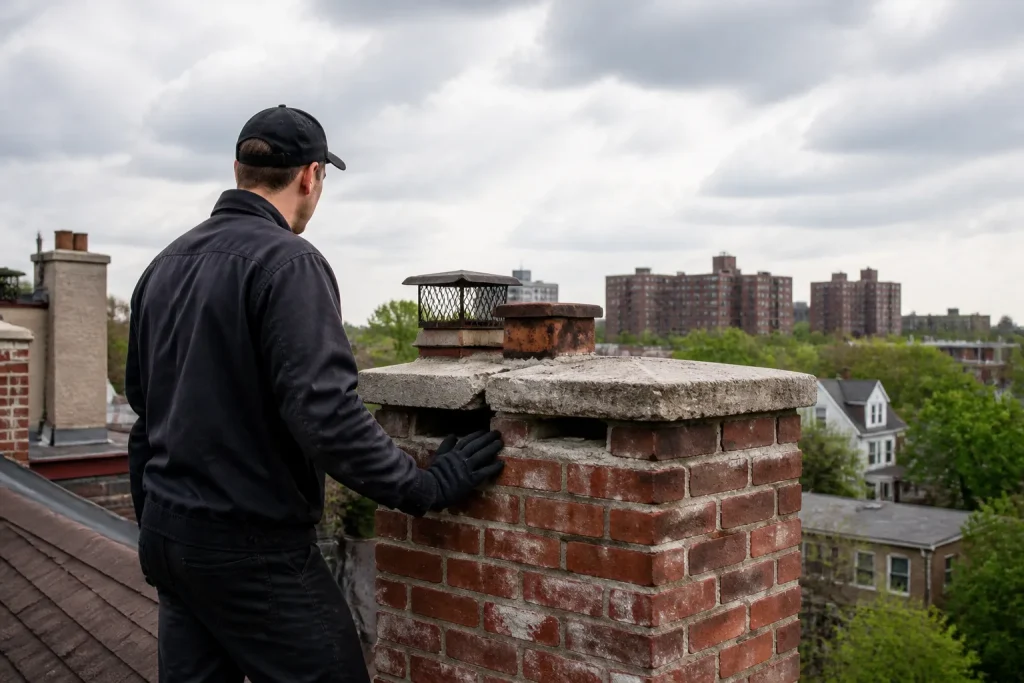
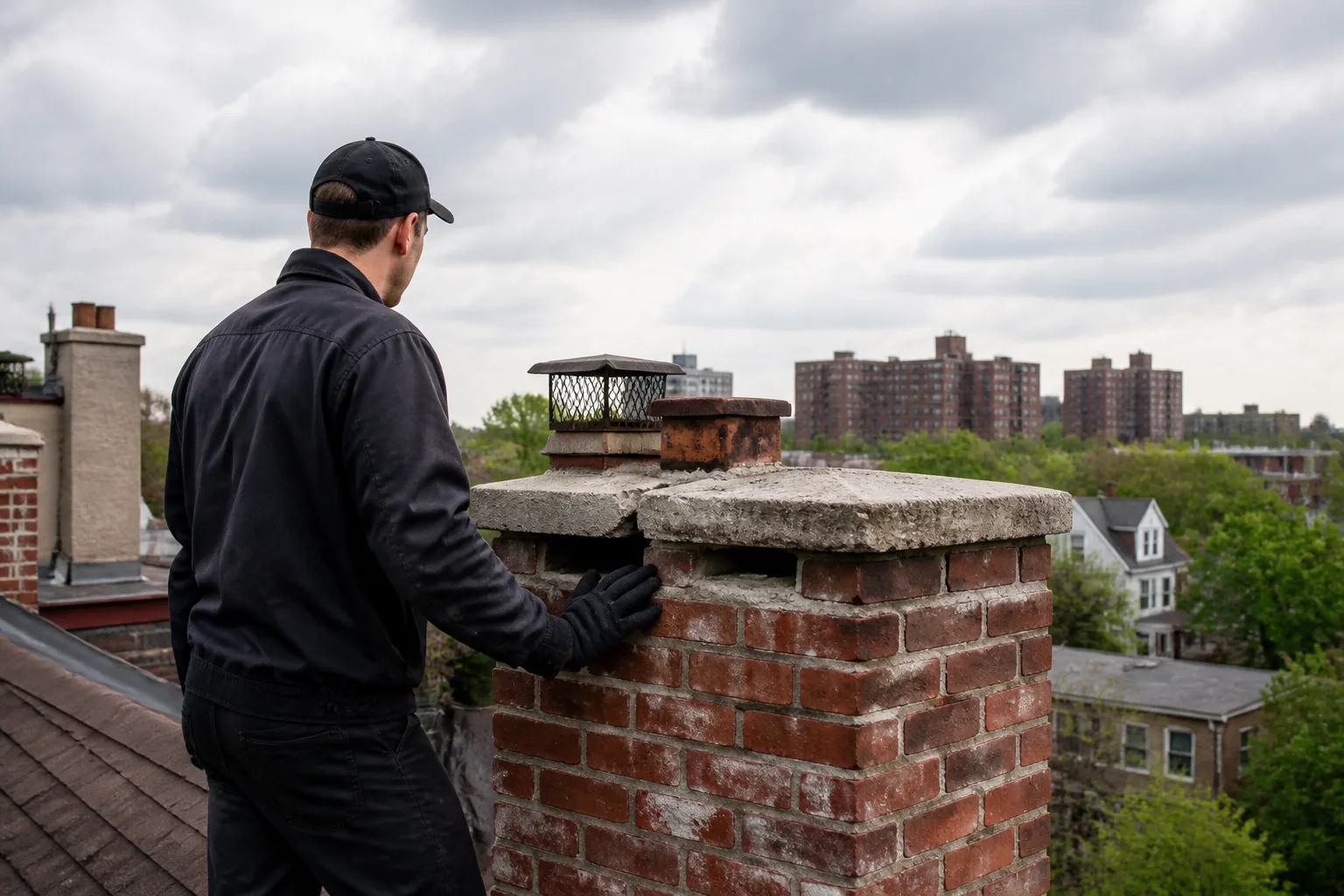
Some of this you can assess from the outside: a cracked crown, a loose cap, obvious crumbling at the top of the stack. The interior of the flue is not a DIY territory. It’s confined, it’s dark, and a failed liner is a real hazard when a fire is burning. Leave the camera work and the masonry repair to trained hands. Our technicians have up to 8 years of experience, and the local pros we work with are licensed and insured as New York requires.
If you’re seeing smoke backing into the room, a strong creosote smell when the fire isn’t lit, or visible damage around the flue opening, stop using the fireplace and get it looked at. Booking a chimney sweep is the sensible first step; the sweep is where most liner and crown problems get caught in the first place.
Related services in Fordham: chimney sweep, chimney inspection, chimney cap & crown, chimney repair, and fireplace repair. One call covers the whole system, crown to firebox, no juggling a second contractor.
The Bottom Line
Repair or replace comes down to what the camera shows and how you use the chimney, not the calendar. A failed liner along most of the flue, spalling interior brick, or mortar joints failing throughout points toward replacement. A localized liner problem, a crown crack that hasn’t spread, or a worn but intact flue usually points toward repair, sometimes with HeatShield resurfacing that avoids a full reline. What you should never accept is a replace recommendation with no footage behind it. Ask for the diagnosis, watch the camera with the technician, and get the repair option quoted alongside the replacement. Then decide.
If you’re in Fordham and want a straight answer backed by camera evidence, Chimney Sweep Fordham offers free estimates. Call (866) 947-8181. We answer 24/7. Fast dispatch from 7am to 7pm, Sunday through Friday. The written estimate sets the final price.
Frequently Asked Questions
Yes, in most cases a chimney can be repaired instead of replaced. Targeted relining with HeatShield resurfacing handles a liner that’s worn but still structurally sound. Crown repair, cap replacement, and localized mortar work cover a lot of what looks alarming from the outside. The camera inspection is what tells you whether the damage is contained enough for repair to hold. Call (866) 947-8181 for a free estimate.
We don’t quote a price over the phone because the range depends entirely on what the inspection finds. Small crown and cap work sits at a different level than a full reline or structural repair. The inspection gives you a real number, and the written estimate sets the final price. Call (866) 947-8181 for a free estimate.
Resurfacing with HeatShield works where the liner is worn but the structure is intact. A full DuraFlex liner system is needed where the original liner has failed structurally or is missing. The camera footage is what separates the two, and it’s why we don’t recommend either without it. Call (866) 947-8181 and we’ll show you what’s actually in your flue.
Ask for the camera footage and a written report. An honest recommendation can point to the specific failure, show you the video, and explain why repair won’t hold. If a contractor can’t do that, or only offers full replacement because that’s the only service they sell, get a second opinion. Call (866) 947-8181. Estimates are free.
Written by the team at Chimney Sweep Fordham.
Need Chimney Cleaning Help?
Call Chimney Sweep Fordham - the local pro we connect you with is licensed and insured, here with fast help in Fordham.
(866) 947-8181