
Last updated November 25, 2026
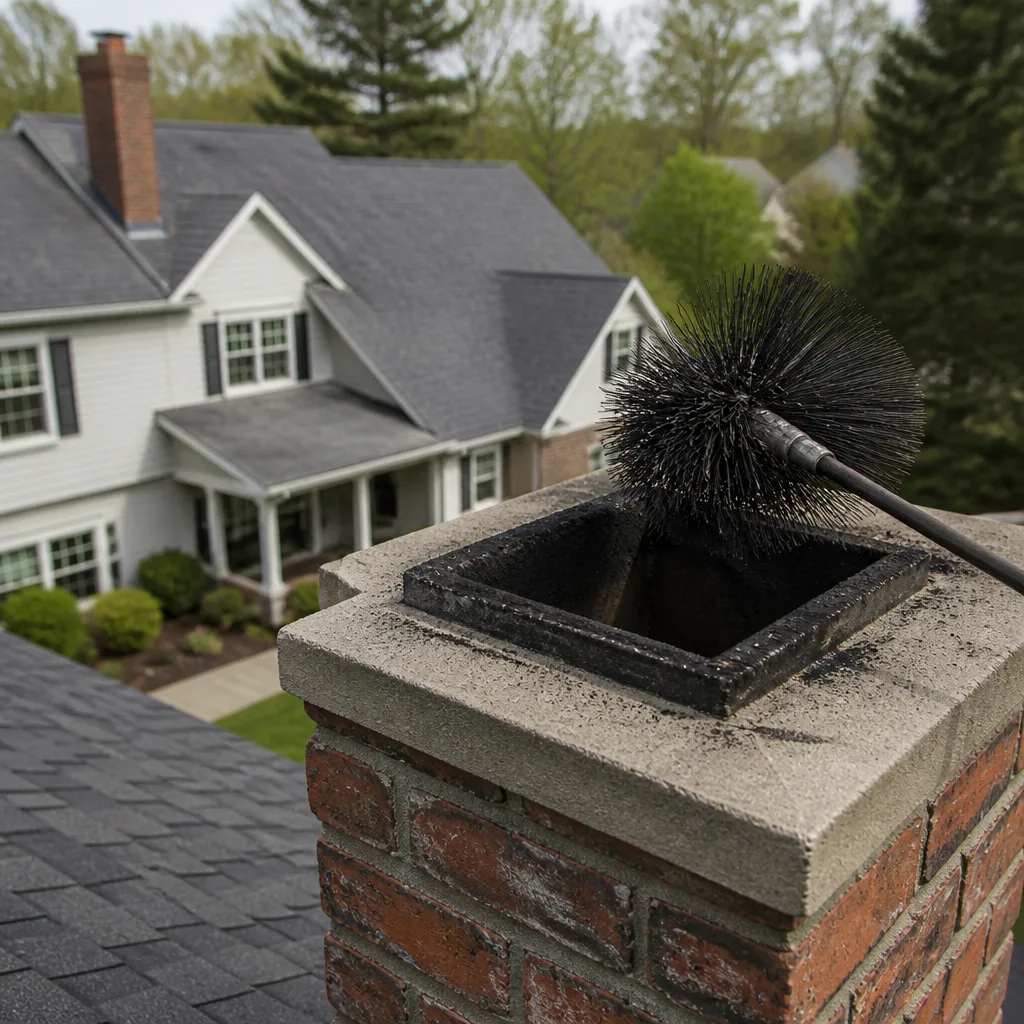 Sweep & inspection
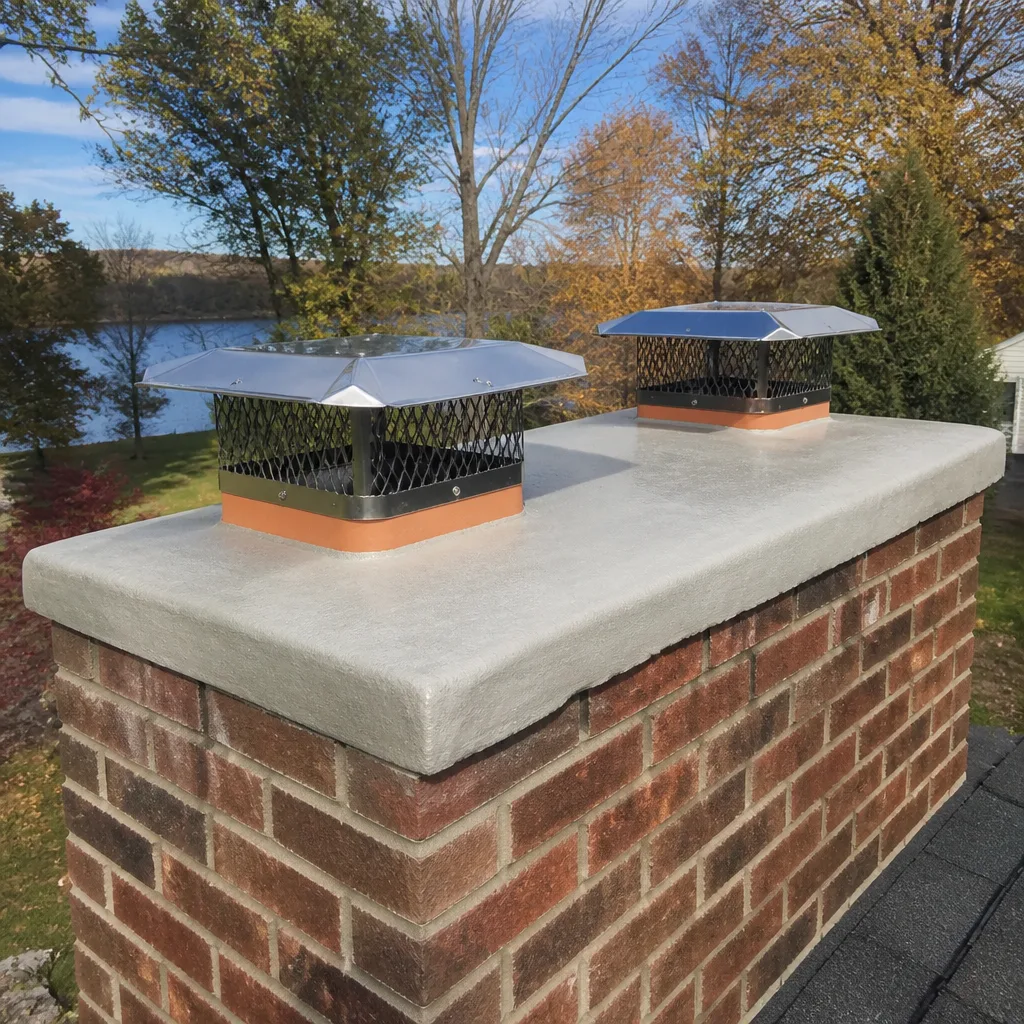 Caps & crowns
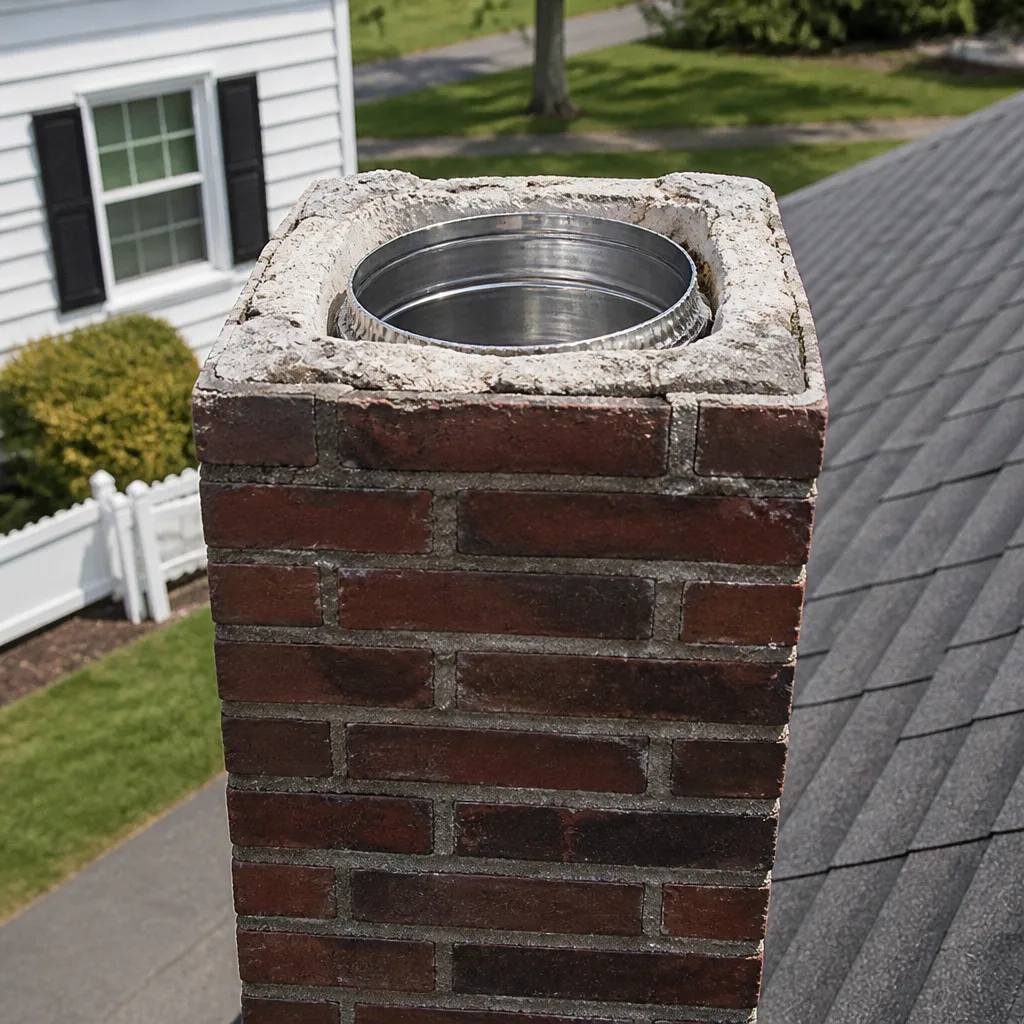 Flue relining
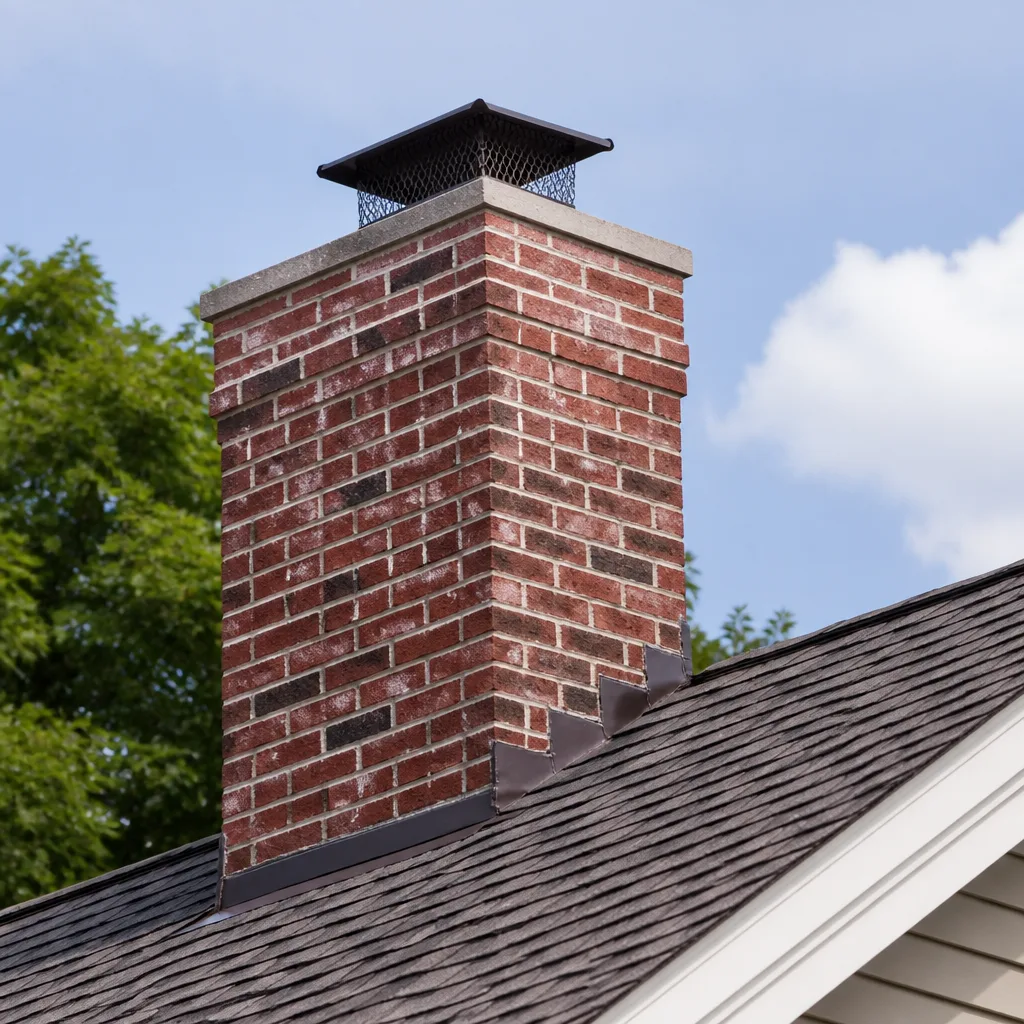 Masonry repair
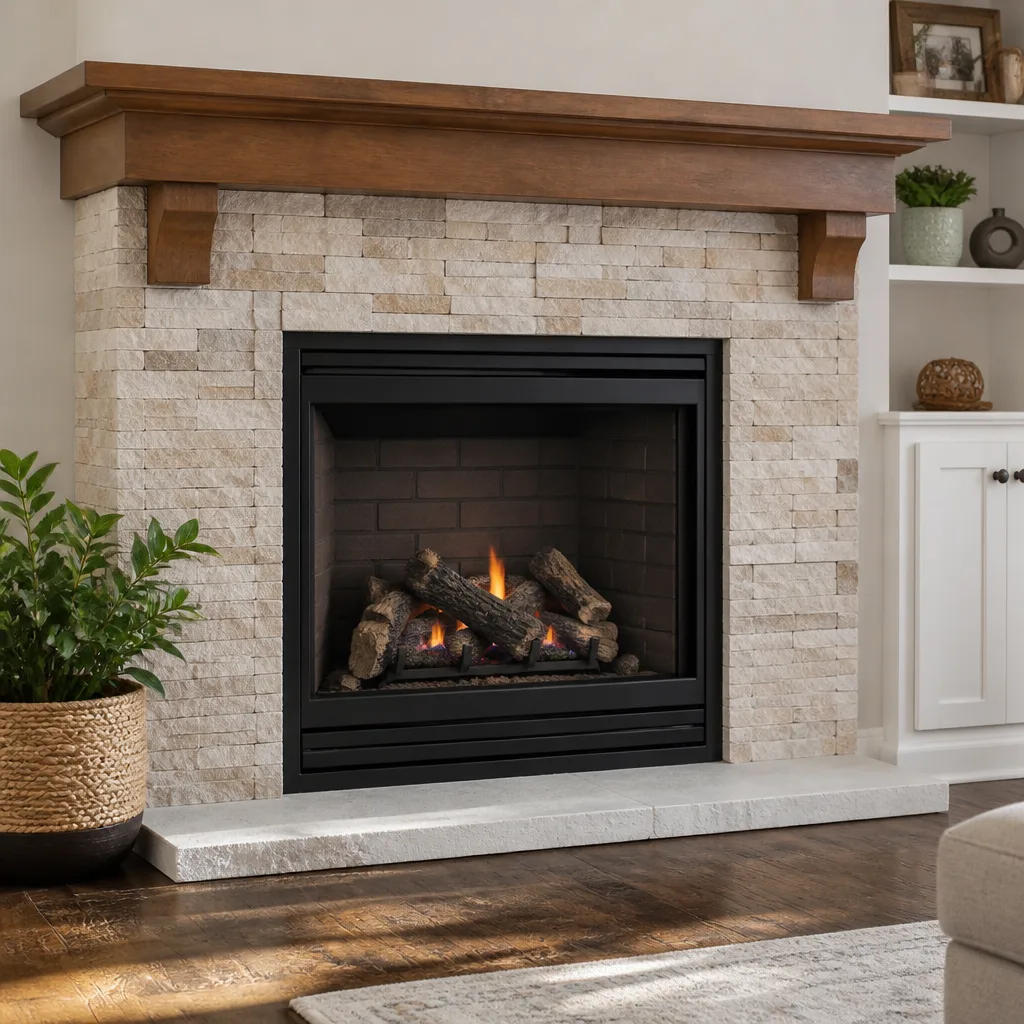 Gas fireplace service
Level 1 sweep and inspection to the NFPA 211 annual standard - flue, crown, cap, and flashing checked and photographed
Chimney sweep logs do not sweep chimneys. They loosen some creosote - which then falls where a brush and vacuum still have to collect it.
Chimney Cleaning Warning Signs: A Fordham Homeowner’s Reference Guide
Most people assume a chimney problem announces itself with smoke rolling into the living room. It usually doesn’t. The first signs are quieter: a white chalky stain on the brick, a faint sour smell on a damp morning, a fire that’s harder to light than it was last winter. A white stain running down your chimney exterior isn’t cosmetic. It’s called efflorescence, and it means water is already moving through your masonry from the inside out. This guide maps each visible symptom to the system failure behind it, tells you which ones mean stop burning today, and shows you how to describe what you’re seeing so a sweep arrives with the right tools. We work on Fordham chimneys every week, and most of what we find was visible long before anyone called.
Quick Answer
The main chimney warning signs in Fordham are white staining or crumbling mortar on the exterior brick, smoke rolling back into the room when you light a fire, a draft that has gotten noticeably weaker, persistent odors from the firebox even when it’s cold, and glazed black creosote visible from the damper. Any of these means the chimney needs a professional inspection before the next fire. Smoke rollout, a strong creosote smell inside the house, or visible glazed creosote are stop-burning-today symptoms. Staining, spalling brick and worn mortar are schedule-within-weeks symptoms.
Styles & brands we work with
- Sweep & inspection
- Caps & crowns
- Flue relining
- Masonry repair
- Gas fireplace service
Table of Contents
- The Symptom-to-Cause Index
- What Your Chimney Exterior Is Telling You
- How to Tell Dangerous Creosote From Normal Soot
- Warning Signs Specific to Fordham’s Older Brick Chimneys
- Stop Using the Fireplace Today vs. Schedule Within Weeks
- How to Describe What You’re Seeing When You Call
- Why an Annual Sweep Catches These Signs Early
- Common Mistakes to Avoid
The Symptom-to-Cause Index
The reason chimney problems get ignored is that the symptoms get described in vague terms. “Unusual smell” and “poor drafting” could mean six different things. Here’s the mapping we use, and it’s the fastest way to know whether what you’re seeing is serious.
- White staining on exterior brick – efflorescence, which means moisture is migrating through the masonry. Root cause is usually a failing crown, a cracked cap, or missing flashing letting water in.
- Smoke rolling back into the room – a blocked or restricted flue, a flue that’s undersized for the firebox, or negative pressure in the house. Sometimes a nest or debris buildup at the top.
- A draft that’s gotten weaker over time – a partial blockage, a damaged cap, or a flue that has lost its smooth interior surface and is catching turbulence.
- Odor from the firebox when there’s no fire – creosote or soot that’s absorbed moisture, or a downdraft pulling flue gases back into the room.
- Crumbling mortar joints between bricks – water infiltration that has frozen and thawed repeatedly, breaking the bond between brick and mortar.
- Spalling brick (faces flaking off) – saturated brick expanding and shedding its face, usually driven by the same water problem as the mortar.
- A cracked or tilted crown at the top – the concrete cap at the very top of the chimney has failed, sending water directly down the flue.
- Rust on the damper or firebox metal – water is entering from above and running down.
Notice the pattern. Most of these trace back to water, and water almost always enters at the top. That’s why we start every inspection at the crown and work down. A wet chimney behaves like a wet chimney no matter what the firebox looks like, and if you fix the firebox without fixing the top, you’ll be back in the same place next season.
For a full top-to-bottom diagnosis, it helps to understand how a chimney sweep and inspection differ. They’re related but not the same visit, and knowing which one you need will save you a phone call later.
What Your Chimney Exterior Is Telling You
You don’t need a ladder to read most exterior chimney warning signs in Fordham. You need about three minutes and a pair of binoculars. Stand across the street or in the backyard where you can see the full height of the chimney, and look for these in order.
- The crown. Look at the very top of the chimney. A healthy crown slopes gently away from the flue and overhangs the brick slightly. Cracks, flaking concrete, or a flat top that puddles are failures. This is the number one entry point for water.
- The cap. Is there a properly fitted cap with mesh over the flue? If you’re looking straight down a black hole, you’ve got an open flue, and rain, birds, squirrels and leaves have direct access.
- Flashing. Where the chimney meets the roof, there should be a tight metal seal. Peeling tar, rust streaks, or a visible gap are all leaks.
- Brick faces. Look for white crusty deposits, bricks that have lost their front surface, and dark streaks. Those streaks are often water tracks.
- Mortar joints. Step back and check whether the mortar lines are recessed more than they should be. Recessed, sandy-looking joints mean the mortar is wearing away and the bricks are holding on by friction.
One thing to understand about the white staining: efflorescence is water-soluble salts pushed to the surface as moisture moves from inside the masonry to outside air. It appears and disappears with the weather. That’s why a careful homeowner can mistake it for a cleaning issue. Recurring efflorescence, or staining that stays put through dry spells, means there’s a continuous water source and the masonry never fully dries.
Water is also the root cause behind most of the structural damage we’re called for, which is why we treat the flashing, crown and cap as one repair rather than three. You can read more about that in our page on chimney cap & crown work. Getting the top sealed properly is the single highest-value repair a Fordham homeowner can make, and the low-cost alternative (a generic cap from a hardware store that doesn’t fit the flue) usually creates a draft problem on top of the water problem.
How to Tell Dangerous Creosote From Normal Soot
Not every black coating inside your flue is a hazard. Normal soot is a fine, powdery black layer that wipes off on your finger. Dangerous creosote is something different, and you need to know which one you’re seeing because the difference is measured in inches of buildup and thousands of degrees of chimney fire temperature.
The industry talks about creosote in three stages. You can see the first two from the firebox opening with a strong flashlight and a mirror, without climbing anything.
- First stage: soot and light flake. A dusting of black powder, or thin, flaky creosote that brushes off easily. This is the normal byproduct of a season of burning and it’s what a routine sweep removes.
- Second stage: crunchy, layered creosote. Black or brown crust that’s attached to the flue walls and doesn’t wipe away. It has some visible thickness. This needs professional sweeping because a brush alone may not fully remove it.
- Third stage: glazed creosote. This is the dangerous kind. It looks shiny, hard, almost like baked-on lacquer or dark glass, and it can’t be removed with a standard brush at all. Glazed creosote is the fuel for chimney fires, and it forms when flue gases cool before they escape, which typically happens with a restricted draft, a cold flue, or burning unseasoned wood.
Here’s how to check without touching anything structural: from the firebox opening, aim a bright flashlight up past the damper and look for a shiny, reflective, hard surface on the flue walls. If it catches the light like glass, that’s third-stage creosote and it needs professional treatment before you burn again. If it’s just a matte black dusting, that’s normal soot.
When glazed creosote is present, we’ll recommend the right treatment for the condition. In some cases we can restore the liner interior with HeatShield, a system that resurfaces the flue rather than tearing it out, which saves homeowners the cost of a full reline. Where the liner is beyond resurfacing, a DuraFlex liner system is the appropriate replacement. Either way, the treatment is based on what the camera finds, not on a guess.
Warning Signs Specific to Fordham’s Older Brick Chimneys
A lot of Fordham’s housing stock is older, and older brick chimneys have a recognizable set of failure patterns. They don’t fail the way modern construction does. They degrade in ways you can spot from the ground if you know what you’re looking at.
The first is spalling. When water gets into an old, softer brick and then freezes, the water expands, and the face of the brick pops off in thin flakes over the season. You’ll see a pile of brick fragments at ground level near the chimney base, or a chimney wall where some bricks look like they’ve been chipped on the front. That’s not cosmetic. Each spall weakens the brick slightly, and enough spalling means the chimney is losing structural mass.
The second is lintel cracking. Older fireplace openings were spanned by a steel angle that supports the brick above the opening. Over decades, the steel rusts, expands, and cracks the masonry it sits inside. You’ll see a hairline horizontal crack across the face of the fireplace brick at the top of the opening, and sometimes rust staining bleeding through the surrounding stone or brick. A cracked lintel is a structural issue, not a cleaning issue, and it needs to be looked at before the fireplace is used again.
The third is crown deterioration. Old crowns were often poured flat, with no slope away from the flue. That means water pools on top and finds its way down. If your chimney has a flat, cracked or flaking crown, that’s the pattern to fix.
Water damage at the top is also the reason so many Fordham homes end up needing chimney repair rather than just a cleaning. We’d rather catch the crack that leads to a masonry rebuild than arrive later to fix a wall that’s already gone.
One more pattern specific to older brick: soot staining on the interior walls near the firebox. In an old house, that staining is often decades old, and it’s the kind of thing you saw as a child and stopped noticing. That’s fine, but if it’s new staining, it points to draft problems, and it’s worth understanding what changed.
Stop Using the Fireplace Today vs. Schedule Within Weeks
Every homeowner asks the same question when they see something wrong: is this an emergency or can it wait? Here’s the honest split. We’d rather tell you it can wait than have you spend money on something that isn’t urgent, and we’d rather you know which signs mean stop than take a chance on one.
Stop burning today
- Visible glazed (third-stage) creosote in the flue, especially if the coating has depth to it.
- Smoke rolling into the room when there’s a fire and the damper is open. This may indicate a blockage or a negative-pressure problem, and both are reasons to stop.
- A strong, sharp creosote smell inside the house when there’s no fire burning, which can signal a downdraft pulling gases back in.
- Any crack or damage you can see inside the firebox, particularly a cracked lintel or a crack through the firebox wall.
- Water stains on the firebox walls or damper that are new, indicating active water entry through the flue.
- Any evidence of a past chimney fire, including puffy creosote or heat damage to the cap.
Schedule within the next few weeks
- White staining or efflorescence on the exterior, recurring or continuous.
- Spalling brick or recessed mortar on the chimney exterior.
- A crown that’s cracked, flat or flaking, or a missing cap.
- A draft that’s weaker than it used to be, but no smoke problems.
- Firebox odors that appear only when it’s humid and clear up when it’s dry.
- Rust on the damper.
One caveat on the “weeks” list. These can move to the “stop” list quickly if they’re combined with smoke problems, or if they’re caught right before the heating season starts. The safest approach: if you’re unsure which list a symptom is on, don’t light a fire until an inspection clears the chimney. That costs a visit. The alternative can cost much more.
How to Describe What You’re Seeing When You Call
When you call a chimney company, the description you give determines what equipment gets loaded and whether the technician arrives prepared. Vague calls lead to return visits. Specific calls lead to one visit that gets it done. Here’s what to have ready.
- Where the symptom is. “At the top of the chimney, on the outside” is very different from “inside the firebox” in terms of what tools the job needs. Be specific about location.
- What it looks like. White powdery or crusty stain? Black shiny patch? Flaking brick? Rust streaks? Compare it to something if that helps.
- When it appears. Only in wet weather? Only when the fire is lit? Every time you walk past? Timing narrows the cause more than anything else.
- How long it’s been there. “Since we moved in” and “since last month” point to very different things. Don’t worry if you’re not sure; give your best guess.
- What’s changed. A new roof, a remodel, new windows, a new furnace, or a change in the type of wood you’re burning can all affect a chimney’s draft and moisture. Mention anything that changed before the symptom started.
- The style of the house and the fireplace. Older masonry chimney? Prefab insert? Open hearth or a wood stove? Each of these takes different tools and different parts. If you know the brand of your insert or cap, say so, since it changes what we bring.
- Whether you’ve stopped using the fireplace. Tell the person on the phone. It helps prioritize the job.
If you’re not sure what you’re looking at, take a photo of the exterior from the ground, and if you can reach it safely, a photo up the firebox with the damper open. Don’t climb onto the roof or open anything up yourself. The photo helps, and safety always comes first. We’d rather see a blurry phone photo than hear about a fall.
Why an Annual Sweep Catches These Signs Early
Every warning sign in this guide is cheaper to fix when it’s found early. A crown crack is a small repair. A crown crack that’s gone untreated for three winters is often a masonry repair, sometimes a liner replacement. The cost difference is significant, and the timeline difference is the reason a sweep is worth booking even when nothing seems wrong.
A proper sweep visit does more than brush out the flue. It’s the moment a trained eye gets a close look at the inside of the whole system. In our experience, the value is in the inspection that goes with the sweep, and we treat inspection as a standalone service for that reason. A homeowner can book an inspection on its own, without a sweep, and get a clear condition report on the whole chimney. That’s a diagnostic baseline, and it’s what lets you make a decision with facts rather than a contractor’s guess.
Our technicians have up to 8 years of experience, and they see the same handful of failure patterns over and over in Fordham: a crown that’s gone flat, a missing cap, and creosote that built up because the fire was burning cooler than it should. None of that is exotic. It’s the ordinary wear that a chimney accumulates from ten or twenty seasons of ordinary use, plus the moisture that New York’s wet fall and freezing winters deliver every year.
For more on how a sweep visit is structured and when to book one, see our Chimney Sweep Fordham page. If the sweep turns up a repair, the same visit can usually be extended into a full diagnosis, and you won’t be handed off to a different contractor. That’s the practical reason we cover sweep, inspection, cap and crown, chimney repair and fireplace repair as one set of services: most of the time, the sweep finds something that the next stage needs to address, and having the same company handle it means no gaps in diagnosis or scheduling.
Common Mistakes to Avoid
- Painting over the white stains. A coat of masonry paint will hide efflorescence for one season, then trap moisture in the brick. The staining shows up worse the next year, and now the masonry under the paint can’t dry. Find and stop the water source instead.
- Assuming smoke in the room is a flue problem only. In Fordham’s older homes, a tight modern window replacement or a new furnace can change the pressure balance in the house. Sometimes the chimney is fine and the house has changed. A proper inspection checks both.
- Using a hardware-store cap on a flue that needs a fitted one. A cap that doesn’t fit properly can cause draft problems and let water around the edge. A properly fitted cap, with the right mesh and clearance for your flue, is the difference between a draft problem and a dry, protected flue. That’s why we fit Gelco and Famco caps, chosen for longevity and fit, not the cheapest option on the shelf.
- Burning unseasoned wood to “get through” a cold snap. It’s the fastest way to build creosote, because the moisture in the wood cools the flue gases and the smoke condenses on the liner. The lowest-cost wood is often the most expensive in the long run.
- Skipping the sweep in a year when you “hardly used it.” Low usage still builds up a film, and the inspection is the point. A chimney can look fine and still have glazed creosote in the upper flue.
- Waiting until the “first cold week” to book. Scheduling well ahead of the burning season means the work gets done when there’s time to do it right, not squeezed into a hurry. In our experience the early-season slots fill fastest for exactly that reason.
- Assuming the fireplace insert means you don’t need a chimney inspection. Inserts and wood stoves have their own venting requirements and their own failure points. An insert’s flue needs to be looked at just like an open hearth’s.
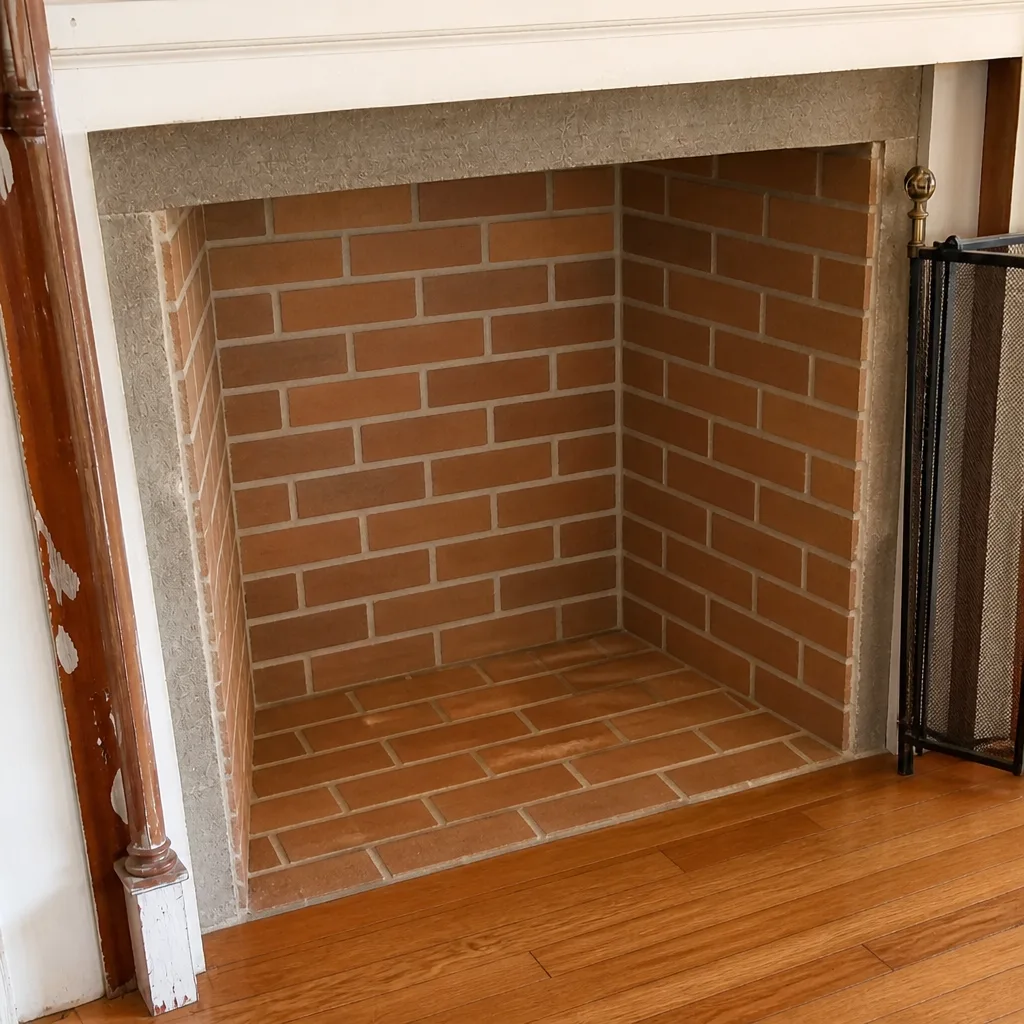
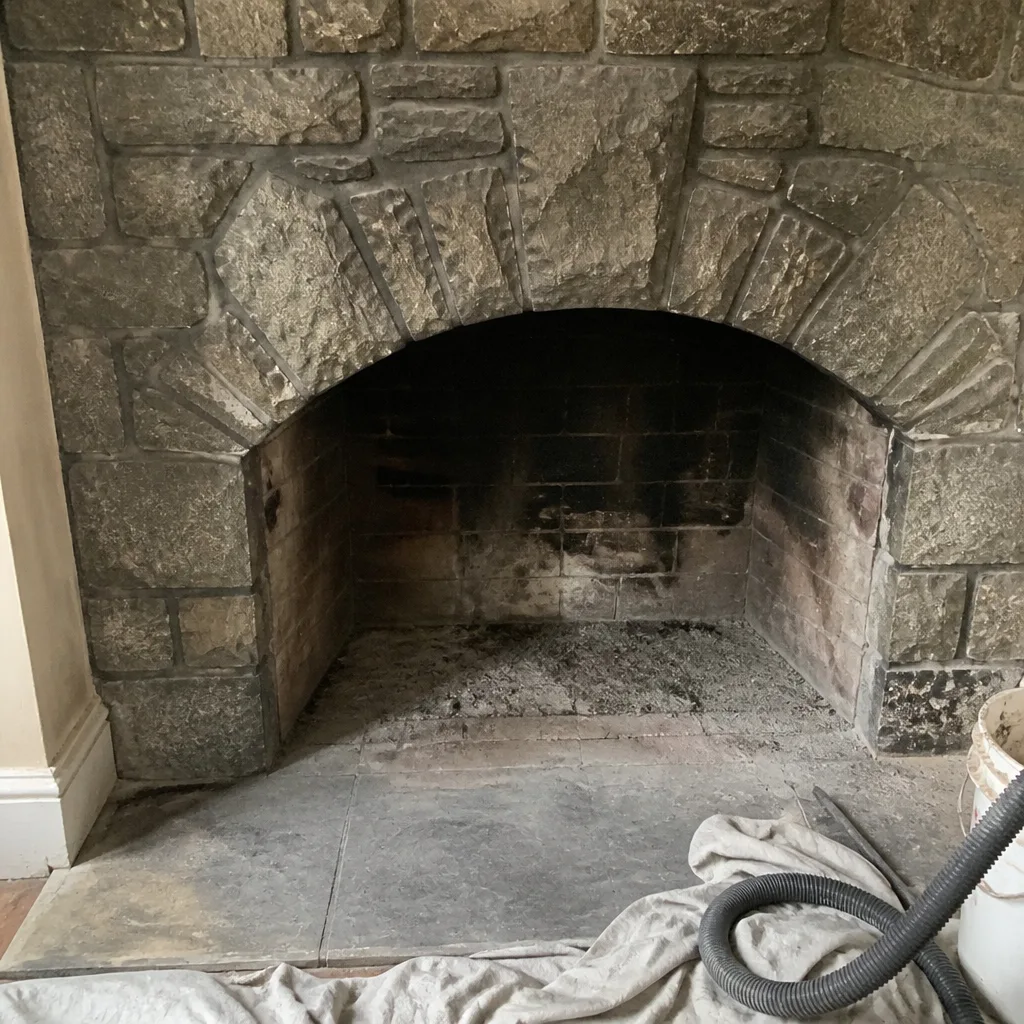
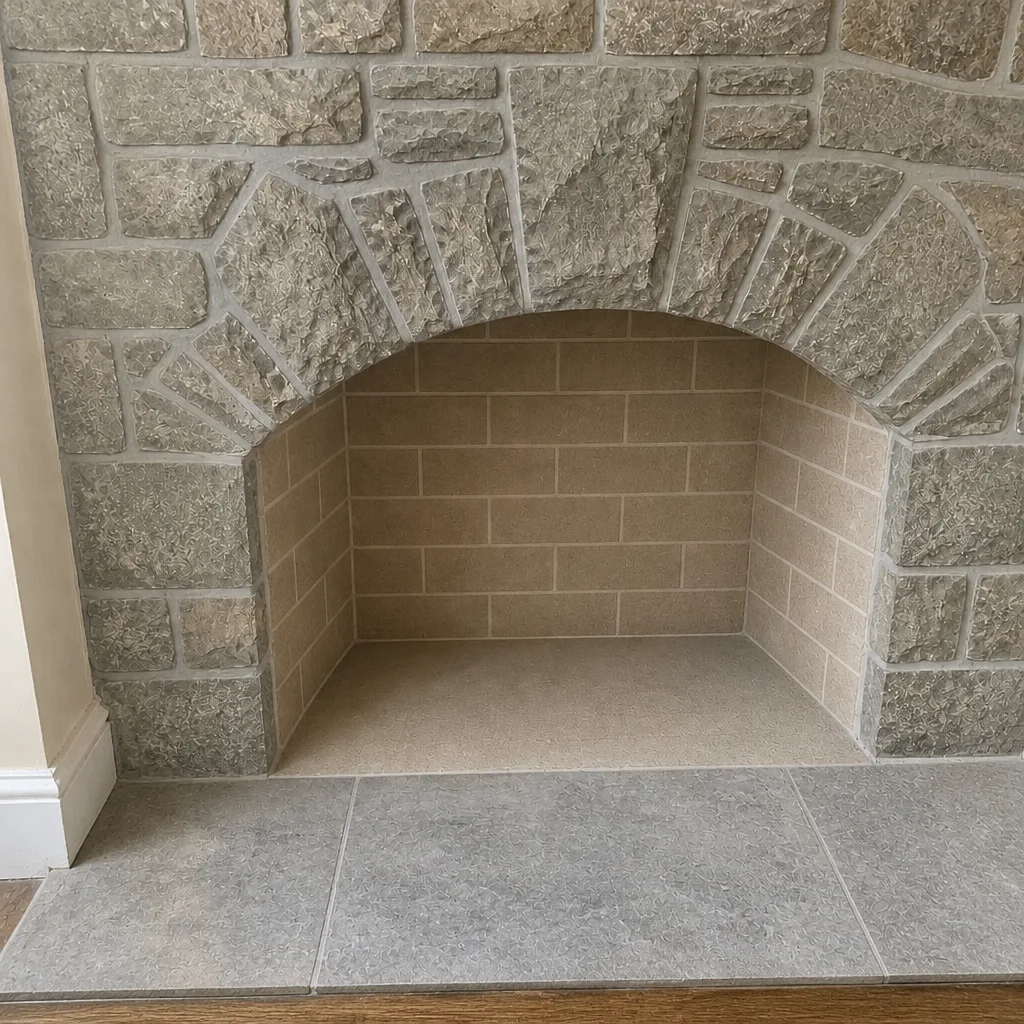
See the difference
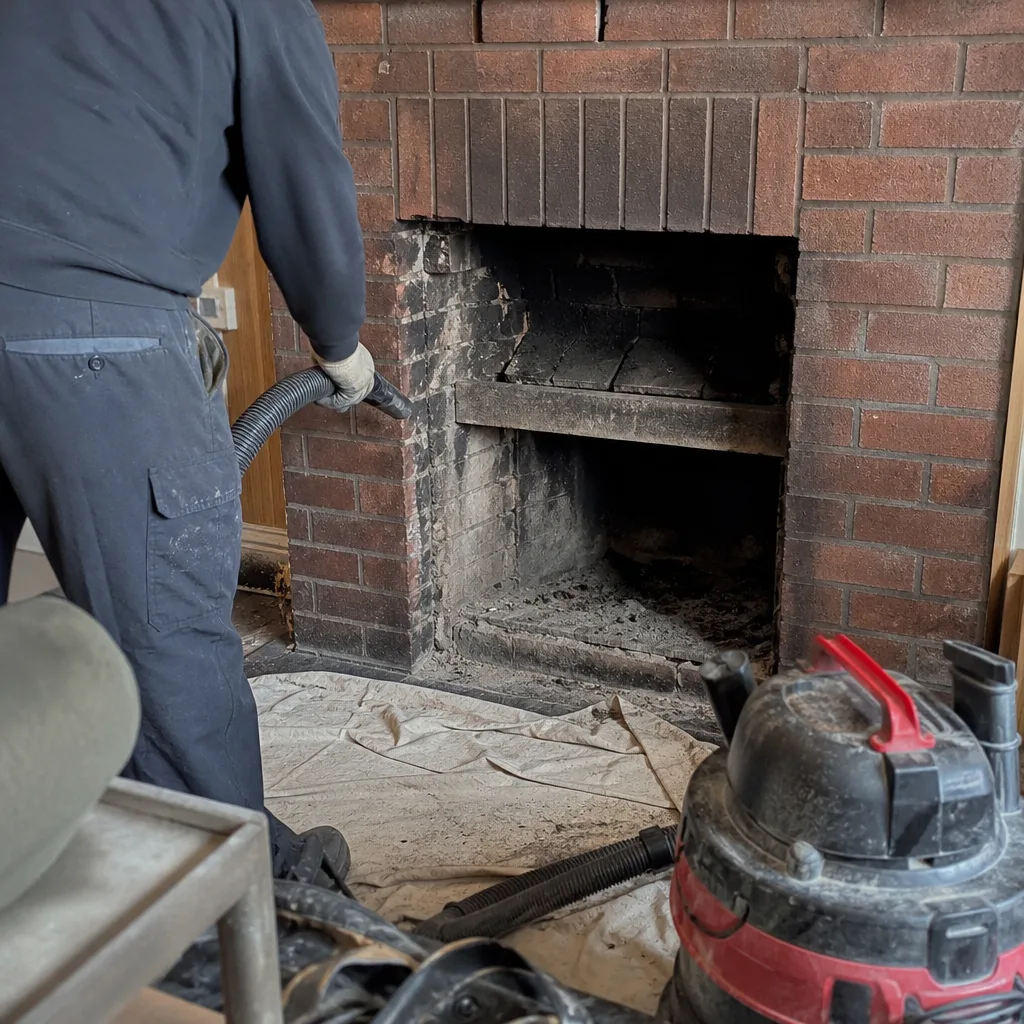 Before
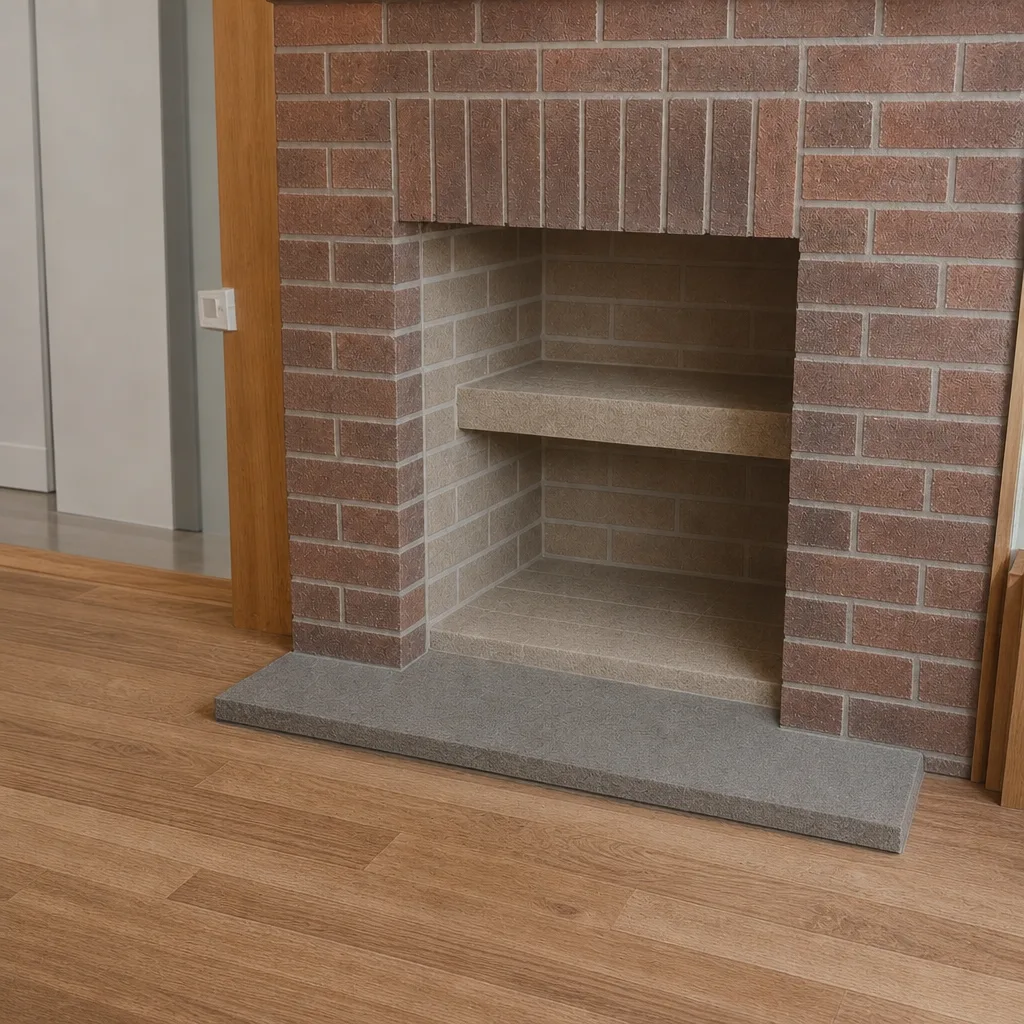 After
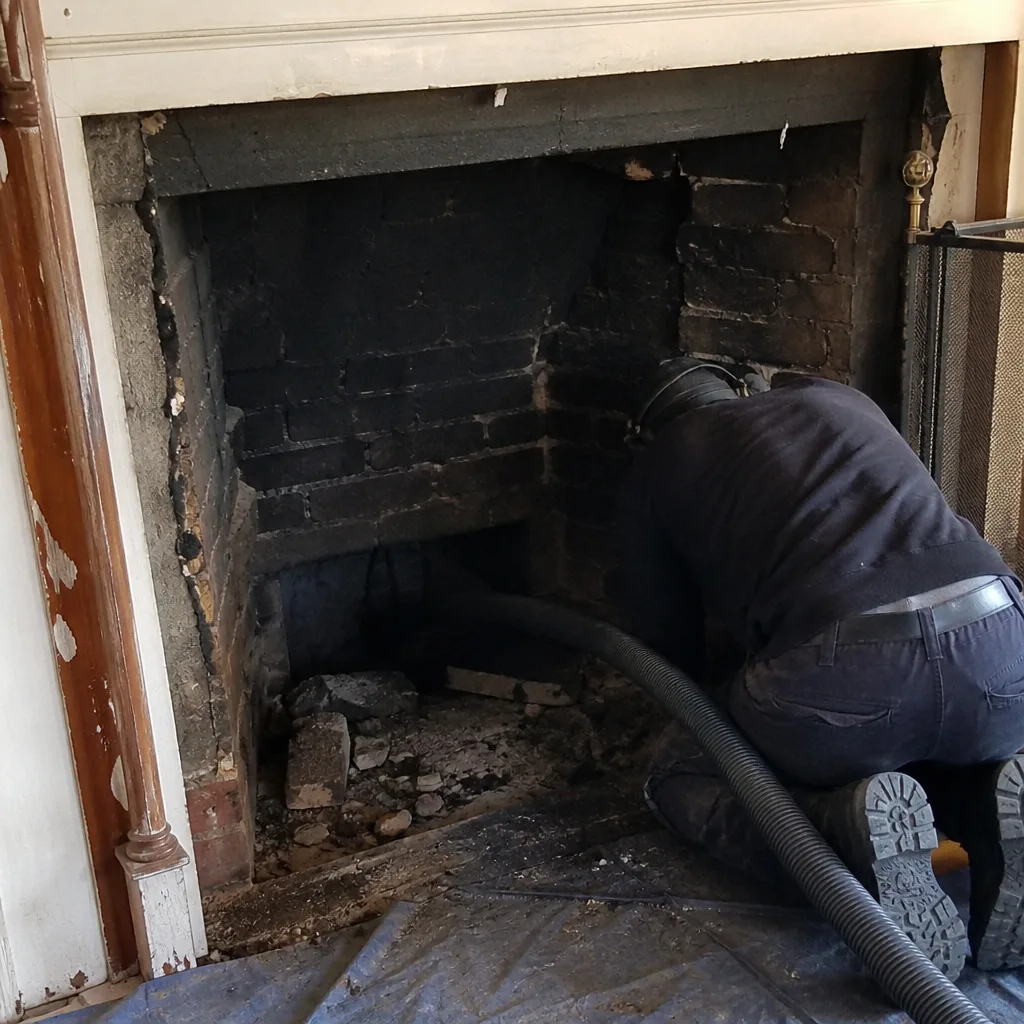 Before
 After
 Before
 After
When to Call a Professional
Call a professional today if you can see glazed creosote from the firebox opening, if smoke enters the room when the damper is open, if you’ve found a crack in the firebox or the lintel, or if you’ve noticed a strong creosote smell indoors with no fire burning. Book a visit within a few weeks if you’ve seen white staining, spalling brick, a worn crown or a missing cap, or if you simply can’t remember when the chimney was last swept. Do not open the firebox or the damper assembly yourself, and do not try to reach the crown on your own. Chimney Sweep Fordham offers free estimates in Fordham. Call (866) 947-8181. We answer 24/7. Fast dispatch from 7am to 7pm, Sunday through Friday.
Frequently Asked Questions
The earliest warning signs are white staining on the exterior brick, a draft that’s weaker than it used to be, and a faint odor from the firebox on humid days. These are almost always moisture-related and start at the crown or cap. Call (866) 947-8181 for an exact quote on an inspection. Estimates are free.
Most Fordham sweeps fall in a typical range of $150 to $350 depending on the flue, how much buildup there is, and whether a camera inspection is included. Inspection as a standalone service is priced differently. We give you a flat-price sweep, agreed before we book, so the price doesn’t shift when the tech arrives. Call (866) 947-8181 for an exact quote. Estimates are free.
Not always. A liner is replaced when the existing flue is cracked, too large for the appliance, or so glazed that a sweep can’t restore it. In many cases a HeatShield resurfacing can restore the existing liner without tearing it out, which is the lower-cost option we look at first. You should never be told you need a new liner without seeing camera footage of the problem. Call (866) 947-8181 to schedule the inspection that tells you which option applies.
The general rule for a regularly used fireplace is once a year, and more often if you burn a lot of wood or burn unseasoned wood. Inspection matters as much as sweeping, and it’s a different service. If your Fordham home is older, or you’ve never had the chimney looked at, an inspection is the sensible first step. Call (866) 947-8181. We answer 24/7. Fast dispatch from 7am to 7pm, Sunday through Friday.
Skipped maintenance lets creosote and moisture damage accumulate, and the two together are what produce the worst chimney outcomes. Glazed creosote raises the risk of a chimney fire, and moisture breaks down the brick, mortar and liner from within. None of this is visible from the living room. Call (866) 947-8181 for a condition report before the next burning season.
Sweeping the firebox and the lower flue is within reach for many homeowners, but inspecting the flue, checking the crown and cap, and reading the creosote stages accurately are not. The work at the top of the chimney and inside the flue is where the real safety issues live, and it’s also where a fall risk exists if you try to reach it. We’d rather you call us than take that chance. Call (866) 947-8181.
The Bottom Line
Chimney warning signs in Fordham aren’t mysterious once you know the mapping. White stains mean water is moving through masonry. Smoke in the room means the draft is compromised. Glazed creosote means the flue needs more than a brush. Old brick chimneys show their age through spalling, cracked lintels and flat crowns, and every one of those is cheaper to fix early than late. The signs that mean stop burning today are the smoke, the smell, and the glazed creosote. Everything else is a call within weeks, not a panic, and a proper inspection gives you the diagnosis you need to decide. Call (866) 947-8181 to schedule your Fordham inspection or sweep. We answer 24/7. Fast dispatch from 7am to 7pm, Sunday through Friday.
Written by the team at Chimney Sweep Fordham.